A look into the musical world of Trevor Rabin: composer, performer, and a man of many careers.
Introduction:
A series of essays wherein I explore the numerous musical identities of my favorite musician: from child prodigy to teen idol to guitar hero to singer/songwriter to award-winning in-demand film composer.
Featuring news/updates and commentary/analysis of Trevor's career and associated projects. Comments are disabled but please feel free to contact me at rabinesque.blog@gmail.com.
Showing posts with label Rabid Rabinites. Show all posts
Showing posts with label Rabid Rabinites. Show all posts
With thanks to the R&RHoF, we have video of Trevor's visit to the facility on October 6th, in celebration of the release of Rio and his status as a Hall of Famer (as the Union-era lineup of Yes was inducted in 2017). And he donated his famous black-and-yellow stage outfit from the 9012Live tour to the museum as well as a chart he had written out of the riff for "Owner of a Lonely Heart."
In this footage of the tour Trevor was given you can also spy Shelley along with Trevor superfans Judy and Melinda, who created and administer the Trevor Rabin Fans page on Facebook.
Yesterday it appears we all received a surprise holiday gift...in the Trevor Rabin Fans fanpage on Facebook (created and administered by TR superfan Judy Davis), Trevor logged in to answer a query about the new album project, stating:
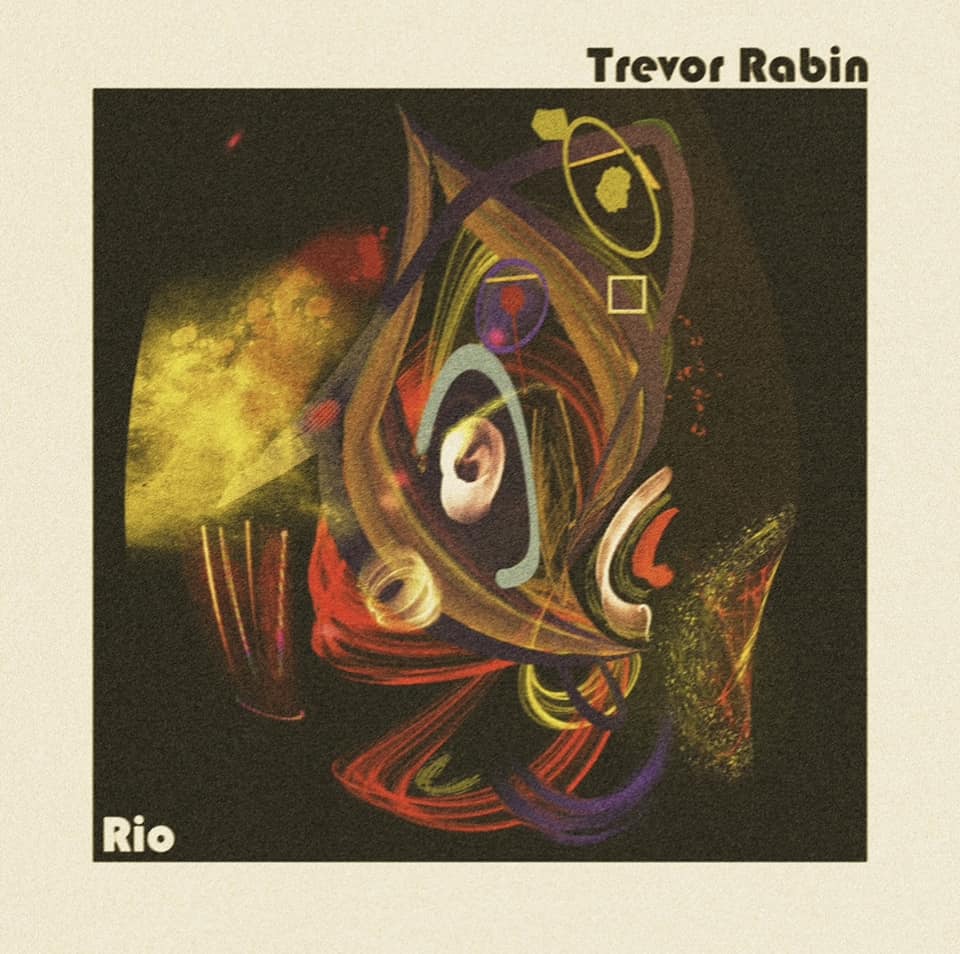
It is done, the cover is done, record company is done.It will will be announced soon. 🥂🥂🥂 I hope it will be enjoyed as much as I had creating it.!
It is titled Rio, for obvious (loving) reasons. Trevor also shared the cover image (which he created, apparently), but as I don't belong to any Facebook groups I have not seen it. So hopefully we will learn more official details during the first quarter of 2023.
(ETA: here is an image of the cover from Henry's site: http://www.bondegezou.co.uk/Rio%20cover.jpg). If it is one of Trevor's paintings it seems in keeping with his particular style.
With something wonderful to look forward to...I wish all my readers worldwide an enjoyable holiday celebration and a Happy New Year.
As we cautiously make our way through 2021 at least there is one bright spot thus far, and that is wishing Our Maestro a very Happy Birthday and being grateful for his 67 years on this planet. I hope his creativity continues to flow, that he continues to be gratified in making music and will be happy enough with the end result to share it with all of us very soon.
(With eternal thanks to Dearest Friend of the blog Cee for visual assistance with the physical media. And also many thanks to everyone who has helped spread the word about my coverage of Trevor. I truly appreciate everyone who has taken the time to read the blog and also provide engagement via links and other comments on social media.)
* ~ * ~ *
The holiday season is upon us, so what better time to review the only score of Trevor's which can conceivably double as Christmas music? Back in 2013 I wrote a Knowing The Score entry about Jack Frost, originally released in 1998, which I will link below. For long-time die-hard fans it's a film which is definitely in our collections because Trevor appears it in as well, as the lead guitar player in the titular character's rock band. So one could reasonably assume that's a reason why this score in particular was selected for the boxset.
But it's also a score promo which has been available on the grey market for many years, that's how I originally obtained a copy of my own way back when. I tend to wonder how the selection was truly considered; I will assert that this promo was not licensed from Warner Bros. I could be wrong, but nothing else in this boxset was licensed outside of the existing arrangement between Trevor and Rob Ayling to distribute his back catalog and archival releases. As anyone who collects such items is aware, score promos are circulated within the industry for a variety of reasons - for example, to voting members of the Academy of Motion Picture Arts and Sciences for consideration when it's time to select a slate for Best Original Score in a particular year. But also copies will be sent to production companies to enable those responsible to adjudge a composer's work if they are considering that person for a project. And of course it's not unheard of for those promos to then make their way into the hands of collectors and used record stores and grey market "distributors." Those who offer promos online for trading are perhaps the least culpable in the sense that they're not charging for something which is not to be sold in the first place.
During my recent exchange with Trevor he decried those in the grey market profiting off his work, and I fully sympathize with that stance. Especially given what many of these people charge per disc. On the other hand, Trevor doesn't necessarily stand to profit again off his own work either, as he does not own the rights to any of his scoring work as it stands. So the inclusion of a score promo in an archival boxset and also for individual sale is cutting it very fine, I would say, as regards the legality of such a selection; as I don't believe that even enough time has elapsed for the rights to the Jack Frost score to potentially revert to Trevor.
But Jack Frost has been consigned to history as a box office bust and therefore could be considered a property that The Powers That Be are likely not too fussed about being used in this fashion, perhaps? The movie tends to be rather more a curiosity than a holiday classic for a few reasons: Michael Keaton as a reincarnated snowman? Really? Also Henry Rollins as the most intensely intense hockey coach (I think his performance is hilarious). In addition to Trevor and Lou's debut, this movie also features cameos by three of the Zappa kids (before the infamous years-long feud over their dad Frank's estate): Moon Unit as a schoolteacher, Dweezil as an A&R rep, and Ahmet as the town snowplow driver. But when I try to imagine one of Trevor's true great"lost" scores being included in this fashion - say, Remember the Titans or Whispers: An Elephant's Tale - well, I tend to believe that litigation would surely follow in the wake of such a decision. So while I think it's a nice gesture as regards the concept (making a previously unreleased score recording available to fans), the execution is yet another example of whatever can be gotten away with and I find that notion suspect as a philosophy.
If actual licensing could have been involved in the process, for example, then a nice bonus would have been the inclusion of those tracks which the Jack Frost Band "plays" in the film and were included on the original soundtrack release - a cover of "Frosty the Snowman" and "Don't Lose Your Faith" (aka "Have A Little Faith") which Trevor appears on.
The accompanying booklet contains stills from the film, one of which is a screencap from the opening scene with the Jack Frost Band (which is obvious because you can see part of a credit in the image). There is actually an existing production still featuring Keaton as Jack singing and you can see Trevor in the background, but that wouldn't have been as interesting to use.
I'll opine that it's not as good as my screencaps just in terms of appreciating Trevor's presence (I mean, look how grainy it is!), but after all, mine have that pesky Photobucket watermark all over them now. I will interject here with a bit of trivia: there was a Jack Frost Band mini-reunion when Trevor appeared on stage with Lili Haydn at the Concert on the Bluffs in 2016, which perhaps is one of those things only Rabid Rabinites would appreciate.
One way in which I think this booklet should have taken its' cue from the promo release was to credit those people on Trevor's team, such as Paul Linford, Gordon Goodwin, Don Harper and Steve Kempster. But in all this is rather a slapdash affair; at the very least I think a short paragraph from Trevor should have been provided to elevate this above the level of a grey market release.
Now onto the music, which I do believe is a wonderful thing to have in your possession even as a score promo does not reflect all of the music actually composed for a film. However, as Jack Frost relies heavily on licensed music there is less score than there would normally be in such an instance. In my previous essay I do opine on the music but I'm approaching this from the perspective of listening to the score rather than marrying the music with the movie so specifically.
Frostbite
Trevor could always be counted upon to write a strong memorable main theme, and "Frostbite" certainly achieves that objective. From those opening chords which are so lovely and delicate and evoke the appropriate emotions associated with love and loss, then progressing through layers of synth voicing to conjure a crystalline landscape of wonder, accented with the warmth of guitar. As I've stated numerous times before, this theme is one of the most beautiful pieces of music Trevor has ever written. As it recurs throughout the film I can understand placing it at the beginning of the running order on the promo, but I tend to believe it works better at the end in terms of the listening experience.
The Snowball Fight
I think this is fun in terms of how it contrasts orchestral and rock elements, something which Trevor would become known for throughout his scoring career.
It's Snowing
This could have been an actual song, the theme contains a delightfully propulsive riff and the harmonica and dobro lines provide an intriguing melody; it's easy to imagine it going on for another 2-3 minutes.
Magic Harmonica
I love the wistful mood of the piano on this one, how it leads into the "Frostbite" motif from another realm.
Miss Him Too
Woodwinds are always instruments of longing and regret and express that mood to me in this particular cue.
The Cabin
This has a definite Christmas vibe to me, it's easy to imagine the very place it is named for, a cozy cabin surrounded by snow, once again leading into the main theme.
Goodbye
As a cue, I appreciate how majestic and cinematic this one sounds, which is fitting for where it is placed in the film.
The J Shot
This theme moves through several different moods before resolving into "human highlight reel" music, which Trevor became known for (and in demand to produce). I really love his dobro playing on this one, which is such a lovely coloring against the strings.
Frost in Medford
I appreciate this as an elegant cue, either this or "Frostbite" really should have been included on the film music composed by Trevor Rabin promo to illustrate his abilities for more lighthearted fare.
Charlie Boy
I believe this cue should have been sequenced with "Goodbye" as they resolve one into the other.
I came across this particular YouTube upload during one of my usual forays and while I appreciate its' ambition I do have a few issues with its' premise...
The description box provides the context:
After Yes disbanded in 1981 following the Drama tour, bassist Chris Squire and drummer Alan White formed a new group with singer-songwriter/guitarist Trevor Rabin and former Yes keyboardist Tony Kaye. This new group was known as "Cinema." Demos were recorded and a debut album began to take shape... That album was never completed. As the album was being mixed, Jon Anderson returned to helm the vocals and the band name "Cinema" was jettisoned. Yes had returned! But what would that album have sounded like without Jon Anderson? Through the years, bits and pieces of the Cinema-era songs have surfaced. This video represents a "best guess," using the songs that were either completely recorded or contained elements and riffs that would later result in the official 90125 release. Some of these songs are complete, others a bit rough, but you will get the picture...
First of all, that album was completed. If it wasn't, we wouldn't have had "Make It Easy" and "It's Over." According to Jon Dee (who was one of the only two fans who witnessed the Cinema lineup in action) there are extant copies of the Cinema album in the hands of at least a few people. I would well imagine each of the Trevors has one, for example. And likely Alan White as well. Also, designer Garry Mouat has stated that the album packaging was originally created for a Cinema release, and was subsequently altered to reflect the new/old identity. So there is a fundamental flaw in this particular assertion. However, I can wholly understand desiring to speculate regarding what a Cinema album would contain and what it would sound like. As his tracklisting illustrates, we have some basis to imagine a group led vocally by Trevor and Chris.
The playlist contains selections which are complete finished songs as well as demo recordings.
Presenting the album that almost was... "Yes: Cinematic"
1) Make it Easy 2) Owner of a Lonely Heart 3) Moving In 4) It Can Happen 5) Changes 6) Cinema 7) It's Over 8) Fools 9) Hold On 10) Promenade
My points of critique/response are offered thus:
-1- Everything on 90125 existed in some form before Jon's rejoining.
A Cinema album would have absolutely included "Leave It" and "City of Love." If you listen to "Leave It," for example, the vocals which are truly dominant are Chris and the two Trevors; it's definitely an example of how Jon was "flown in" (in audio engineering parlance) to flesh it out.
-2- It doesn't make any sense to include more than one version of a song.
As example, you wouldn't include both "Don't Give In" and "Make It Easy" - you would probably only have the latter. So why would you include both "Hold On" and "Moving In" - if it's simply for the purposes of illustration then the obvious choice is "Moving In."
-3- "Promenade" is not era-appropriate.
If we take Trevor at his word. he worked up a version of this composition for inclusion on BigGenerator, not90125 - even though, yes, there was an prior version of it (as we have the evidence of a demo from the early '80s).
-4- The appropriate date is still 1983.
Recording of the album was not actually completed until mid-1983, so even if it had been released as a Cinema album, it would have occurred in 1983, not 1982.
So in terms of my best guess, the Cinema album would have probably been more like the following if we consider comparisons for what made the final running order:
Owner of a Lonely Heart
Moving In
It Can Happen
Changes
Cinema
Leave It
Make It Easy
City of Love
Fools
...but you can certainly create a version which omits "Leave It" and "City of Love" and substitute with "It's Over" and "You Know Something I Don't Know," or "I'm With You" for example. Or even - though I shudder to think - "Would You Feel My Love." But that's just in terms of what we are aware of - the majority of fans don't know all of the songs which were recorded for the album, and we might never know.
Granted, Jon's contributions to 90125 are fairly significant even considering that he was only involved for about three weeks in the final recording process. Without Jon you would not have "Our Song" or "Hearts" but you would have a version of those songs. There are versions of all of the songs, but Jon did make a fair amount of changes/additions to the majority of the lyrics.
After my deep-dive examination of 90124 and what that album should have been if it was truly going to be a precursor to 90125, it strikes me that we could also consider the Cinema record as a version of 90124, since supposedly that was the original catalog number assigned (and thus the title). Naturally we are left with a certain amount of speculation, but my contention is that the game of What If is always better played when you know as much history as is out there to discover.
(With eternal thanks to Dearest Friend of the blog Cee for visual assistance with the physical media. And also many thanks to everyone who has helped spread the word about my coverage of Trevor. I truly appreciate everyone who has taken the time to read the blog and also provide engagement via links and other comments on social media.)
Note: I know I had promised this installment in the review series much earlier but it took me a long time to write this entry mostly because I was doing so much comparative listening. We're talking five different sources, which you might very well say is overkill. And you may be right about that, but for some reason I felt it was necessary in order to render a well-informed opinion.
* ~ * ~ *
For more than a few fans, Trevor's three-week 1989 North American club tour is more of a mythical consideration and would have remained so if not for the release of the recording of the Los Angeles show in 2003. It's never been precisely articulated why those tapes sat in storage for fourteen years but I'm assuming, like the other archival output, the impetus came from Rob Ayling to finally release it. Beyond that, the tour itself was an itinerary of legendary venues and intimate shows. Having listened to various recordings I can say that it sounds like a professional-level performance was delivered at every gig - even as there might be some slight variances - and wholly entertaining for fans, especially those who had never even dreamed they'd get a chance to see Trevor performing in such a setting.
It would appear, at least from audience reaction, that the shows were successful in their aim even - when comparing the scope of the production to the number of actual people who witnessed it - if not from a financial perspective. And as to whether the tour aided in promoting Can't Look Away, that's another matter as well. Taking on a fairly brief headlining club tour as opposed to an opening slot on a summer blockbuster (such as Styx's guitarist Tommy Shaw did to promote his first solo release in pairing with Billy Squier, touring for Squier's release Signs of Life in the fall of 1984) months after the actual release of the album meant that some of the momentum had probably stalled by then. But again, this unique experience is what those who witnessed it can treasure in their recollections.
For example, journalist Elyse Glickman had this impression when seeing Trevor's gig at Chicago's Park West music venue on November 27th:
During a live concert, Trevor Rabin exposes many dimensions of himself to the audience. When singing his current light-hearted hit "Something To Hold On To" Rabin carries off a boyish charm reminiscent of his days as a teen idol in 1970s South Africa. In more serious songs like "I Can't Look Away" and "Changes" his expression is sincere and dignified. In an emotional performance, Rabin proves that he can go beyond the pomp and circumstance of Yes, his source of notoriety in the '80s, to stand on his own as a musical presence.
* ~ * ~ *
This entry in my Changes review series is also an instance of I've already reviewed it, in the case of the remastered Live in L.A. released by Varese Sarabande in 2014. I am providing a link to that review and also the entry about the '89 club tour as part of my "A Guide to Field Recordings" series.
In my album review I provided the original setlist for the tour and I wanted to reprise it here as a starting point to discussing the recordings and for the sake of clarification.
Entrance: Lift Me Up (intro)
Cover Up
Sorrow (Your Heart)/Birdland (excerpt)
Heard You Cry Wolf
Changes
Etoile Noir (with Jim's bass solo)/Eyes of Love
Solly's Beard
Something To Hold On To
You Know Something I Don't Know* (with Mark's keyboard solo)/Promises
Sludge (featuring Lou's epic drum solo)
I Can't Look Away
Encore:
Make It Easy/Owner of a Lonely Heart
Love Will Find A Way
*(Recently on an episode of Yes Music Podcast, the only two fans to actually witness Cinema performing [in 1982 at the John Henry rehearsal facility in London] referred to the former song as "Carry On" and that may well be the actual title. It's the title which became associated with the song as their recording of the rehearsal circulated in fandom during the intervening years. The reason I think it's titled as I've indicated has to do with the chorus, long-time fans know very well that Trevor normally places the song title in the chorus. To be fair, both phrases can be heard in the chorus. I believe I have seen a copyright filing with the title I use, but I can't conclusively verify that.)
Let's discuss the provenance of this recording. My apologies but I don't have the name/pseudonym of the original taper/seeder. If that person wishes to make themselves known to me or someone has that information and can impart it to me (via email) then I do wish to give proper credit.
It was originally a simulcast of the show on December 5th, 1989 from Boston's Paradise Theater on local FM station WBCN. Any and all versions of the Live in Boston recording stem from this single source. It was recorded onto cassette from the radio and then transferred to digital and speed-corrected using a Roland VS-1680 DAW then downloaded to CD-R and converted to FLAC for seeding/trading. At some point the Highland Project took this source and created the Cry Lonely Wolf version and released it on CD in 2008 (long after it had been put into circulation online) but that particular bootleg is not the original source of this recording even if it was used as the source, if that makes sense. And they're out of business now, so I consider that karma because...well...philosophically no one should be paying for bootlegs.
Of the three recordings from the '89 club tour which I have found it is absolutely the best quality because it was a radio simulcast. But despite whatever "remastering" (yes, I am using scare quotes in this case) has been utilized on the source and hence on this particular release, the source is actually at least a generation removed from what is available in trading circles. Plus, c'mon, Cry Lonely Wolf doesn't even have period-appropriate photos on the cover! Those are both Talk tour era photos. At least with Live in L.A. the effort was made to use images from 1989.
Of course, it could very well be that the source of this iteration is not the Highland Project release, and only the artwork is being referenced in the packaging. I don't actually know. But because I do believe a full show from the '89 tour should be widely-circulated and I have personally lobbied for such a thing for years, and this is the only way it's going to happen? My morals are just going to have to sit down and shut up. And Rob Ayling has already set a historical precedent for this kind of thing with Union Live.
The main goal I wanted to accomplish was comparative listening using my copy of the original seed versus the copy included in the boxset. But also, my primary point as regards the release itself - as a document of the '89 club tour - is this: Live in L.A. is the best listening experience in terms of the recording, mix-down and mastering, originally. You can really appreciate the performance of the songs, Trevor's peak as a guitar hero, and how the band as a whole worked quite well to entertain at an arena level within a club setting. The Live in Boston bootleg is the best listening experience of what the show was actually like from a historical standpoint, and that is something fans can definitely appreciate, whether they actually attended one of these gigs or not. I've encountered more fans over the years (myself included) who didn't see Trevor on the club tour than did and I think it's something we deserve to possess and enjoy. I remarked to Trevor during our latest exchange that because I was unable to travel to Tempe to see him (being a cash-strapped grad school student living in Albuquerque at the time) having a full show to listen to means a lot to me as a fan. I'm still regretful to this day but at least I can have a memory of what it was like. And so including both recordings in the Changes boxset is a nice completionist gesture, even as I'm not entirely certain it's really necessary.
As I've already reviewed the Live in L.A. 2014 remaster I really don't have much to say about the original version as far as its' inclusion but if it has in fact been remastered for Changes, I can't really tell. It sounds pretty much identical to the version of the Voiceprint release I already have.
In regards to having compared the two sources of the bootleg, there has been some "goosing" I would say, in terms of boosting the mid-range, making some elements cut through a bit more, like the vocals and the guitar lines. I'm not certain that was the best decision. But overall you can still tell this is a bootleg, which I believe just goes to show there's only so much you can do with such a source. There's a lot of hiss. But because we're hearing the actual document of Trevor playing to less than a thousand people there is a certain immediacy which might be missing from the official version of the experience.
The differences within the versions - a direct recording versus a professionally mixed-and-mastered record - is illustrated in terms of the changes Trevor made either for the recording itself or in post-production. Even as there are backing tapes and sequencing incorporated within the performance itself there are still some elements which appeared to be added later, such as the echo spins in "Sorrow (Your Heart)." And I assume whatever flubs there might have been were also repaired during the mixing of the release. The Boston recording really is "warts and all." And it's valuable in that way, I am still convinced of the importance of its' availability to fans.
So now to consider the ninth show versus the fourteenth show (with a bit of lucky 13 thrown in)...
Lift Me Up (intro)/Cover Up
I believe most of us can agree that the intro to "Lift Me Up" makes for great entrance music. And I think "Cover Up" makes for a great opener as well, it's quite dramatic. It serves to establish everyone's acumen from the very beginning. But there is a very serious recording glitch in the Boston recording which is not on my original copy as far I'm aware. Again, how could this have gotten past quality control?! I remain unconvinced there was any. And it features the first of more than a few instances of Trevor flubbing the lyrics.
Best version? Live in L.A.
Sorrow (Your Heart)/Birdland (excerpt)
I love that "Birdland" was used as the coda to this song, it's such a treat and it fits in terms of utilizing a different ending. I don't particularly mind the post-production edits on the official release. Best version? Live in L.A.
Heard You Cry Wolf
I love this song, as long-time readers of the blog are aware. But at the Boston show, Trevor was having a really hard time with staying in key, yikes! And this was a song recorded after his range had already dropped, historically-speaking. Honestly, I wouldn't be surprised if Trevor re-recorded his vocal for Live in L.A. And I don't take issue with that myself. At least he got the title right, because in San Diego he said it was "Cry Wolf." And because "Changes" was edited out on the Boston disc there's an abrupt cut which obliterates the ending, again, totally shoddy post-production work. Maybe because those songs directly segue one into another that wasn't the best choice in terms of making the edit.
Fun fact: this song is actually another example of Trevor's social commentary, at least according to the explanation he gave to Elyse Glickman, taking aim at the ZA government: "[It's about] covering up and making cosmetic changes. It's like the government is crying 'wolf' to fool everybody."
Best version? Live in L.A.
Changes
I feel like this song was a benchmark on the tour - like, it was important to get it right every night. But again, it seems like Trevor might have rerecorded his vocal, or mixed it really dry in the recording. The version on Live in L.A. sounds better than other sources even as there's not much difference in the performances. What really makes me think this is the attack on the long note at the end of the first verse. We know if he can do that, then it's all okay. And none of the live versions I've heard are as good as the officially-released one in that respect. In Boston, Trevor can do it, but it's obvious that he's straining, and he can't hold it to let it fall off the way it's supposed to. Best version? Live in L.A.
Etoile Noir/Eyes of Love
The Boston show is important because we are treated to Jim's fretless bass solo; this song is fairly intricate and I enjoy the flourishes Trevor threw in, and I feel like that live version is able to breathe more, after a fashion. It sounds good for being a little looser. And the way he bends that one note in the verses? So good! But once again, in Boston Trevor flubs the lyrics. At the L.A. show they play it closer to the album.
Best version? Live in Boston
Solly's Beard
That intro? Priceless. As I've written an entire essay about this piece I feel like I don't need to expound upon it further, except to say that it's wonderful to hear an actual version from this tour. There's that one part though, which sort of almost becomes both "Memphis" and "Dueling Banjos" and how fun is that?! Best version?Aaaaah, that's a trick question! But I think having an actual recording from the club tour is a good thing, so the point goes to Live in Boston.
Something To Hold On To
Because this was the lead single from the album I think they tried their best to make it fairly uniform each performance. Frankly yes, I am amazed that Trevor can hit that high note in the intro even on the boots. I do think it was mixed to sound a little less live on the actual album.
Best version?Whichever one you prefer.
You Know Something I Don't Know/Promises
As something which didn't make the cut for Live in L.A. the choice is obvious and it's great to have this opportunity, especially in its' unedited form (as it surely would have been edited had it ended up on the album). Whatever the first part is actually called, it's a pretty rockin' tune I must say. I know there are those who will consider this blasphemous, but it always makes me wonder what it would have been like if Mark Mancina were in YesWest because he's a total pro with soul. Casey wouldn't have been out of a job...but he might have had less to do. "Promises" is another song they try to make sound as close to the album as possible and this time it seems like he purposely changed the lyrics for some reason. Not wholly, just in a particular way. I like the echo spins on the chorus - I'm assuming it's meant to reprise the feel of that big gated reverb on the vocals in the chorus.
Best version? Well, there's only one, so there you go.
Sludge
Another song I've gushed about previously so there's no need to go over that again; although I believe the boys played this well enough every night, after all the listening I've done I will say I think the L.A. version is the best-performed even as it's not the most complete. I think you can hear the keyboards better on the Boston recording and of course it's got Lou's epic drum solo. It may even be that it was another one fixed in the mix for the official recording. So it's really a draw for me, but again, the live experience provides the very best version of the song overall.
Best version?Whichever one you prefer.
I Can't Look Away
Here now is the most fucking basic of errors:
The album? Can't Look Away.
The song? "I Can't Look Away."
So it's been mislabeled from the start on Live in L.A.. But you would think that SEVENTEEN YEARS would be long enough to realize that there was a mistake. Then again, consider the source.
You know who got it right, though? Varese Sarabande. So you know who I think is more professional.
The Boston show features what I would consider a more "raw" lead vocal. It's also got audience participation and that's fine but this song is Trevor's mission statement, so I believe it's far more important for him to sing it. Overall however, I think the L.A. version is much more show-stopping, even though I suspect it's been quite heavily augmented and fixed. But I'm convinced his solo in San Diego was a dress rehearsal for Los Angeles because it's equally as badass. Everything we love about Trevor as a guitar hero is in that solo.
Best version? Live in L.A.
Make It Easy/Owner of a Lonely Heart
On both the Live in L.A. and Boston versions the crowd does the majority of the singing so it's interesting to listen to recordings where Trevor is actually singing. "Owner" in its' final form is not in his range, as we know, so that always makes me tense. In San Diego it's not so bad, but it's not that good either. But I am disappointed Trevor edited out that funky breakdown which comes right before the last chorus. I think the party atmosphere of audience participation makes the song more fun, as is fitting for an encore. The L.A. crowd sounds better at singing, but that might also be the result of post-production tweaking. Best version?Whichever one you prefer.
Love Will Find A Way
The difference in the way this song was performed really depended on where it was in the setlist. It sounds a lot less ragged on Live in L.A. but it's also pretty obvious how augmented the song is in terms of backing tapes and sequencing. This is another one where I feel like they were trying to get as close to the record as possible. But again, it's nice to hear Trevor on lead for this one.
Best version?Whichever one you prefer.
* ~ * ~ *
And now to the CD booklet, which I will say is a definite improvement in some ways on the original except for the image on page five....which is an obvious photoshop of the photo included in the Wikipedia article about the Paradise Theater/Paradise Rock Club. Why is that necessary? That's not even the original marquee, as the club was renamed (slightly) in the late '90s.
Really? REALLY?!
It just strikes me as wholly amateurish, but then again so does the original booklet. The liner notes may be dated March 2020, but it's the same text from the 2003 release save the end paragraph regarding the inclusion of the Boston show. I love that photo on page seven (an outtake from the CLA cover shoot) but again, why does it have to have that ghastly red filter?!
As I've stated previously, even though this release is nothing I would consider well-done and everything in keeping with the kind of non-quality Rob Ayling offers, the Boston recording is a historical document which I believe is important to Rabinites and one which can provide enjoyment even as many long-time die-hard fans would have already obtained it for themselves long before this.
A series featuring commentary on live recordings from my collection.
The timing of this entry is primarily prompted by a fandom works crossover so crazy it might actually work! Recently I joined fellow Yesfan and dear friend Jennifer Albright, co-creator/co-host of the Have You SEEN This? podcast, for a discussion of 9012Live - that cinematic classic and YesWest cultural document of everything which is both glorious and hilarious but also endearingly kitschy about the 1980s. My eternal love and thanks to Jen for entertaining my idea, being so gracious to allow me to come on her show, and for all the hours we've spent geeking out over prog rock through the years.
This is a bonus episode of the show, so if you'd rather listen to the edited version you can join their Patreon to access it for a pledge of $2.00/month, which will also grant you access to all the other bonus content available. I highly recommend it if you'd like to support a really great podcast!
I admit that I might have flubbed on a few things in my comments, so I will fully cop to any mistakes and offer apologies. I did have notes, but some of the discussion was off-the-cuff. And that discussion is equal parts serious and humorous and takes aim at some sacred tenets of Yes fandom, so I caution against potential offense to listeners, thus I offer a... Content warning: contains profanity, snark, general affectionate irreverence and lampoonery courtesy of two fangirls who are also legitimately discerning adults. Caveat audiens.
But as I already had a write-up of the film and the album in the works, I decided I would combine the two, so here now is my commentary on these releases, provided as an accompaniment to my remarks in the podcast and in observance of 9012Live's (in both forms) 35th anniversary this year.
*~*~*
Beyond fandom circles, Yes' concert film 9012Live is known for being director Steven Soderbergh’s professional debut; the movie is 67 minutes long and concentrates on songs from 90125, with only two songs included from the Classic Yes era. 9012Live received a Grammy nomination for Best Long-Form Music Video in 1987 but lost out to Sting’s documentary Bring On The Night. It was one of the earliest releases from Atlantic Records’ Home Video division, which was launched in mid-1985. In VHS form, 9012Live had an original retail list price of $29.88.
The film was aired on HBO but was also screened in rock clubs as a worldwide promotional “video tour” beginning in February 1986, which was reportedly covered by MTV at the time.
9012Live and 9012Live: The Solos were released simultaneously in November 1985, the album was created as a companion to the film. The DVD release of the film came in 2006, featuring bonus content and a Director’s Cut without the Charlex effects, then an expanded version of the album was released in 2011 featuring two extra songs. But we still don’t have an officially-released pro-shot/recorded version of an entire 9012Live show...and we probably never will.
Although Charlex's involvement in the world of music videos would be relatively short-lived (though the company is still in operation to this day), their participation in the production of 9012Live was considered rather groundbreaking at the time. In May of 1985, Billboard covered Charlex’s work on the film for the Video Music section of the publication - Charlex was brought on board the project to “modernize” and “enhance” the film, to bring it more in line with the way music videos were being created at the time. This was the first time the special effects production company had been asked to work on a longer-form project, on the heels of their award-winning contributions to The Cars’ video for “You Might Think.” Lookout Management liked what they had done with The Cars' Heartbeat City videos collection from 1984 and asked them to do something similar for 9012Live. But while Charlex created only transitional pieces for The Cars' video album, they did much more for 9012Live, even beyond what was originally negotiated for their contract. They envisioned each song as a type of music video on its own while also including transitional pieces between songs as well as a framing device to begin and end the film (as long-time fans are aware, the ending is where the title for the next album came from), and used the palette of the album design and stage production as their guide for those elements which appear in color. Since all of the Charlex footage came from the 1950s (educational and industrial training films, for example), I find it amusing that it’s considered a modernization, but I know that’s strictly meant in terms of the use of post-production SFX. There’s all kinds of effects used for the “living electronic collage” they created as the framing device.
The source of the intro/outro: "Young Man's Fancy" created for the Edison Electric Institute in 1952.
By the time Charlex received the film it had been edited down to nine songs. They were asked to leave “Owner of a Lonely Heart” alone - hence the sort of gimmicky (but not in a bad way, in my estimation) editing you see in that song instead, although I love that “smash cut on speed” utilized at the beginning, sequenced to that one famous sample. I wonder if maybe they considered releasing another single and video for “Owner” around that time consisting of that part of the film (hence why it has more obvious edits), but their choice was “Hold On.”
While I certainly prefer watching the film without the Charlex effects, I can appreciate the effort which went into them, both thematically and technically. As a piece of conceptual video I think it works some times ("Changes" and "City of Love") and not others ("Hold On" - which really just needs to be viewed in all its' actual bromantic glory). Historically I can understand why the braintrust thought it was a good idea to contemporize the band's efforts overall. Love it or hate it, YesWest has a distinct visual identity in the continuum and that's a big reason why I love it.
Oh, and this. I love it for this too.
Filmed in Edmonton, Canada in September 1984 near the end of the North American 9012Live tour, the film is a mix of live footage and pick-up shots which were filmed during the day of the second show - it was a two-night stand, and they filmed both nights. I think it’s edited quite well but you can tell the difference, especially when it comes to “Starship Trooper” where everyone looks rather more sweaty in certain shots but not in others. Apparently the film was also meant to include the encore “Roundabout” but it was cut, perhaps because there’s a continuity error - Trevor isn’t wearing the same pants in all shots. In some it’s the black satin pants with the yellow striping, in others black leather pants. I think the leather pants may have been from when they were filming the pick-up shots. That portion is included as bonus content on the DVD release.
Watching the Director’s Cut versus the original version gives you an appreciation for the way Soderbergh decided to film the show, there’s an immediacy achieved without having to necessarily resort to the kind of editing and post-production which was typically utilized at the time by directors like Russell Mulcahy, Wayne Isham and Marty Callner. It seems a far more “natural” experience of a concert, if you could see a show up-close in that way. Compared to the way Yessongs was produced in 1972, for example. Yessongs is very dark and it’s primarily close-ups shot from the photographer’s pit mixed with long shots from the balcony and then also shots from the side of the stage. In 9012Live there are intentional editing cuts to the music at some points, and the use of varying types of composition to emphasize that this is a band onstage. The staging itself dictates a sort of artificiality of perspective and use of the space. Originally Yes was going to have Berlin as their opening act for the 9012Live tour but the raked stage set meant there was no room for another band to set up, thus fans got to watch cartoons while waiting for showtime and this set a precedent over the course of their particular career trajectory. But overall the editing is wholly engaging and dynamic and adds great value in terms of repeat viewing. Soderbergh stated in an interview from 2012 that at the time he was working on the film he believed he was turning into a formalist - he liked to polish things - but I don't view it as a drawback in this case.
The best thing about 9012Live, in my estimation, is that it is shot on film rather than video. It makes everybody look so gorgeous. And despite being an artifact of its' time that particular medium provides it with a certain timeless aura when viewed in the present day. It's amusing to me that many fans deride the '80sness of the film, especially in terms of hair and wardrobe but the truth is Yes has always been a band of its' time in that respect. They've always worn rather fancy stage outfits and sported haircuts which were trendy (Chris especially). So it's rather less hypocritical to opine that their '80s look was not to one's taste but the '70s were fine because reasons. It's certainly laughable now on some level, but really I think it's wonderful to have a document of a time when they were young and popular and excessively glorious. Because that's never happening again. I find it's something more than mere nostalgia to experience. To watch 9012Live provides something beyond memories of my own youth, it's joy in a particular triumph and that translates to their performances. If I'm depressed, 9012Live never fails to give me happiness. So in these trying times it's become entirely necessary in maintaining my overall mental health.
That's right: 9012Live is my self-care. There, I said it.
But it's not as if the performative aspect is underplayed in this film, there's editing choices which emphasize the personalities and staging very distinctly - such as "Leave It" which as we know now was pretty much entirely lip-synched (save for Trevor and Jon's lead verses and end refrains) and set to the single version of the song, augmented with a few instrumental flourishes. Certain parts of the performance are choreographed, and probably even more so for the sake of the film. As well, certain aspects of the production had changed by the second North American tour, as the laser effects were omitted but they continued to utilize the fairly large Vari-Lite rig. But it makes for an entertaining experience, even if it's one which makes you laugh (and possibly even sympathetically cringe). Again, Chris Squire was known for more than a few things, and his outsize personality and flamboyance onstage were legendary. The uniqueness of the situation is part and parcel of the film itself, meant to celebrate YesWest as much as market them to any portion of the public not already in their thrall. The Arena Rock performative aspect is entirely necessary in terms of entertainment value. It's also interesting to have a document which primarily focuses on their contemporary identity, as when the band performed they had to continue to acknowledge the past, culminating with the Eighty Dates tour in support of the Union release and a setlist which was more Classic Yes in its' makeup than what they were ostensibly supposed to be promoting. Fans were then somewhat shocked to witness the band playing nearly the entirety of Talk in 1994, as they had grown so used to the preponderance of Classic Yes songs in a typical YesWest setlist.
But this is what touring used to be about in the Long Long Ago - playing the new songs. And by taking on the mantle of Yes - and thus the collective history of the continuum - even an updated version of the band could never wholly focus on cultivating their own identity.
And so even the live album - if you can call it that - was again focusing on contemporary Yes, with the "solo" setpieces within the '84 setlist as well as two songs from 90125. It really comes off as more of a novelty than anything, although I think it's enjoyable as a live document even as it also subverts the established expectations of fans.
The additional songs included on the 2011 reissue had both been previously released:
"It Can Happen" - as the b-side of "It Can Happen" (Atlanta 4/16/84)
"City of Love" - as the b-side of "Rhythm of Love" (from 9012Live - Edmonton '84)
...and they're nice to have, certainly, but I think it would have been possible and also desirable to include something from that tour which technically had never been released before, such as a recording of "Hearts." We know there is audio of complete shows in the archives, even though it's very likely it will simply remain there. I also think it's entirely reasonable to state that "Cinema" should have been included as the first track as it represents a collective solo setpiece of sorts and makes for a nice overture (as both YesWest and ARW amply demonstrated in their shows). But I certainly recommend getting the reissue for anyone who's a completist or perhaps has never owned a copy of this release previously. It's unfortunate that only the original release has been licensed for streaming. Of those full songs included, I do think the two which are most indicative of the YesWest live experience are "Hold On" and "City of Love" which sound so amazingly alive and masterful in their renditions. And I will say as someone who has never been that big of a fan of "It Can Happen" - the Atlanta version, while heavily augmented by sampling and backing tapes, is also really engaging. Repeated listening has caused me to realize that the figure Trevor plays behind the verses sounds a lot like the riffing in "Run Like Hell."
One consideration is if YesWest had released a traditional live album then the solo spots would have likely been omitted in favor of songs and so I suppose given a choice of one or the other it's understandable that someone (like the band) would have wanted documentation of this aspect of the live experience. It could even be that because we don't see this aspect in the film it also prompted the decision to make the solos the focus of the album.
Given what has been included overall via officially-released sources, here is how 9012Live: The Solosshould be sequenced (in my opinion).
Hold On
Si/Solly's Beard
Changes
Soon
It Can Happen
Amazing Grace/Whitefish
City of Love
More than a few fans have also posited that they believe the version of "Solly's Beard" included on the remastered version of Trevor's Live in L.A. album was sourced from 9012Live: The Solos and I will say I also believe that's likely correct. I've done some comparative listening and it's definitely from 1984 as well as nearly identical in length. It certainly would have been the easiest source to obtain. It makes sense from a logistical standpoint but not a contextual one, which I elaborated upon in my "Trevor vs. Trevor" essay from 2016. But it is one of the best versions and also best-recorded, so I get it, even as it makes the research geek in me twitch because it's not a historically-accurate inclusion. Speaking of sources, the solo spots themselves are from their June 24th show in Dortmund (which was also filmed and televised in part) and the full songs from the 9012Live recording.
But also speaking of expansions...let's talk about the DVD extras because 9012Live is an example of a reissue which is entirely desirable with new (to us) and exciting bonus material (unlike pretty much everything else having to do with YesWest archival releases at least in the past decade or so). This is the visual release (besides YesYears) which is absolutely required for YesWest fans to own.
Access All Areas
This is a behind-the-scenes look at the '84 tour, but it's also almost an inversion of the expected format. I would call it perhaps an "observational documentary," a short film with a particular editorial perspective, one which is rather more frank about the backstage experience (but not in an overtly salacious kind of way). It's largely humorous but at times that's because all Steven has to do is point the camera and whomever is in the lens is "on." But I completely understand why it wasn't released in 1985, it's simply too honest about the business of touring and the business of YesWest - if in fact it was meant to be released at all; it's possible Soderbergh shot it for the organization's amusement, or his own for that matter. The ridiculous and the cunning are presented with equal focus and directness. I suppose you could say that it does dilute the glitz of what we imagine rock stars experience in that we witness the job of required social interaction with journalists, contest winners, radio station employees, and Atlantic Records reps in an endless parade of introductions and small talk. I am also amused that in those sequences the two people you don't see are Chris and Trevor. In fact you don't see a lot of Chris in general, which I assume is purposeful. Although you do get two distinct examples of his drier than a gin martini humor - Chris Squire was the master of a well-timed quip.
The most obvious example of commentary I can think of is the "Meanwhile..." intercut, illustrating that the performative aspect of rock n'roll touring only works as well as it does because it's actually powered not by its' stars, but by the people who take care of everything else behind it. The fact that the conversation in question is about a decision which one of those stars made (and it is something The Goon did not agree with) only underscores the distinction in terms of the power dynamics at work in this particular milieu.
And speaking of the little people: as much as the role of Casey Young has been downplayed over the years by various people (and then those claims subsequently debunked by Casey via social media) just think about how many times you see him backstage. He wasn't just a tech, he traveled with the band. He is actually identified in the end sequence. So let that perspective speak for itself, as it were. Casey had a job to do, but don't believe anyone who tries to convince us he didn't work all that hard.
Speaking of unsung heroes - the legendary road manager Richard Fernandez (the guy in the white hat) is shown several times along with his assistant Mickey Heyes, and these are the guys who really do all the work, along with the road crew, which Steven doesn't seem to be particularly interested in because we've never treated to a sequence showing load-in or out. It was kind of a cliche at that point, I suppose. But this leads me to ask...who is The Goon, exactly? He's a man who can make things happen, that's for sure. You always need a good fixer on the road, where anything can happen (and frequently does).
Naturally the greatest virtue of this short film is Trevor Rabin: sometimes bitchy, mostly goofy, wholly adorable. Who wouldn't want to just follow him around and chronicle his hijinks?
I think perhaps the most compelling aspect of Trevor's appearance is his air of Oh isn't this entirely ridiculous? coupled with the charm and charisma he has obviously possessed since birth, infusing his entire personality. The camera loves him, and so do we.
The Interviews
This is b-roll footage and it's uncertain what it's meant for but filmed concurrently in Edmonton. These segments were edited by his long-time collaborator Larry Blake (who was the sound recordist on Access All Areas). I think the whole is far more interesting for what isn't said as much as what is. But I also think they all tend to come off equally guarded and unguarded. There's as much equivocation as candor in their replies. And hairspray - lots and lots of hairspray.
PS: here's a couple fun facts...Soderbergh was only 21 when he directed 9012Live, and his birthday is the day after Trevor's. Capricorns: Most Likely to Become a Wunderkind.
PPS: I've brought this up before, but recently I read a retrospective review of 9012Live on a film blog and the person who wrote it joked that Soderbergh gave James Spader in Sex, Lies, and Videotape Jon Anderson's hairstyle and that is not correct. Don't get distracted by the blond thing. Soderbergh gave him Trevor's haircut circa the Edmonton shoot. It's positively uncanny.
A series featuring commentary on live recordings from my collection.
Spotted on YouTube: with thanks to Rabid Rabinite Edith de Viu, the audience recording of Trevor's show at the Bacchanal in San Diego on December 12th, 1989 is available for your online listening pleasure.
As I commented previously, the setlist for the club tour was largely static, so it's not that different an experience from Live In L.A. save that it includes "Solly's Beard" and the solos as well as onstage remarks. Since this is an audience recording it's not quite as clean, but as I remarked to Trevor during our recent exchange, because he was playing smaller spaces even an audience recording is going to be fairly decent in terms of quality. I have already commented somewhat regarding this show and the Toronto date in a previous entry but as I am going to be reviewing live recordings in future as part of the Changes review series, I'll have more to say about the tour in general (again) later.
Here's a look at Changes for those who haven't received their order yet, or may still be pondering a purchase. It's a bit funny to me that there's some cross-promotional love there with advertising included for Rick's merch. He doesn't show all the discs in the set just because it appears he didn't open the box all the way but you do get to see the extras (i.e. the poster, the booklets and the promo photos).
Some of you may have witnessed my full-on Rabid Fangirl freak-out on the Yesfans forum regarding the contents of the upcoming box set. Dear Reader, it was the veritable gamut of emotions.
Trevor is releasing a box set: OMG YAIS, this is amazing.
Reading the details of said box set on the storefront: Uh...what?
It's true I have some issues with some things but it's also true that the information provided by Gonzo Multimedia via the storefront is just downright confusing.
So I wanted to raise a few of those points as a die-hard fan (and someone whom this release is targeted directly at), and hopefully we might receive some clarification from someone before March 16th. I do find it kind of odd that after Henry Potts and I broke the story, so to speak, there's been no actual official announcement from anybody. I don't mind being the one enacting the publicity but you'd think there would be a plan for this sort of thing, right? Because any other outlet which reported on the box set did so hours after I did. So, once again: You're welcome.
How many discs?
As Henry helpfully pointed out in discussion, they have disc seven appearing in the listing twice, once for the Rabin-Hodgson disc (presumably) and once for the Boston show. So are there ten discs or eleven? Do we get a full show recording on two discs, or an edited version on one disc and the collaborations with Roger?
Beginnings or Trevor Rabin?
It's déjà vu all over again, it seems...when Trevor Rabin was reissued in 2003, it bore the original album title and cover art. Now it seems this version is the opposite, with the eponymous title and cover art (ugh). The tracklisting in the description is for Beginnings, and IF that is true, that is amazing. A remaster of Beginnings is something I have desired for a very long time, and the subject of one of my entries back in 2017. Now I don't even know if I should be excited. Is it actually correct? And if so, why did they not just use the original title and cover art (which they already had in the archives, presumably). But I'm really hoping this is not a misprint!
Do we get a full show?
Returning to a previous point. when I received the email from Ray Reithmeier regarding the storefront update, he pointed out to me that it appears the Boston show disc bears the cover of this bootleg version: https://www.discogs.com/Trevor-Rabin-Cry-Lonely-Wolf/release/8151269
...and thus it's a reasonable supposition that the release is sourced from it as well (i.e. the original radio broadcast). But in conjunction with the issue of the number of actual discs, it appears uncertain. I'm also going to speculate that there were two versions broadcast: one was a full show simulcast by WBCN on 12/5/89 and one was an edited version by Westwood One sometime in 1990. It could be what will be included in the box set is this latter version and that would be disappointing, as I previously stated. And that's not even touching upon the fact that if they are using that cover, it's not even a photo of Trevor from 1989!
WTF?!
I don't know what to say about 90124, it's not even the same tracklist as the original CD? Of course the original CD also contained numerous errors in the liner notes, so...has it been resequenced, with some tracks swapped out, or what?
Extras
Bonus content is always a crapshoot from a fan's perspective, but it is disappointing in this case as most of the bonus tracks for the individual reissues are previously available, either in the collector's market or online.
But can we talk about the poster for a minute? As a fan, as a collector, I love posters; I am someone who - as some fellow fans/readers are aware - has an entire room decorated with posters, photos and artwork of Trevor. And the thought of a new poster made me very happy...until I closely examined the photo of the box set contents. The image used for the poster is the one which graces the back cover of Trevor Rabin, but presumably reproduced at a higher quality. But seriously...Trevor Rabin has the worst cover art of all of Trevor's solo albums. As I opined on Yesfans, what they should have done was reproduced the poster which came with the Japanese version of the album, which I have exhibited previously on the blog. I doubt it would have been difficult to obtain a copy for scanning. Or how about the poster which was created to promote Can't Look Away, which, sure, you can still buy on eBay but it's a great photograph (as are all of Lisa Powers' images). I'm assuming that one will at least be included in the photo book.
Were you really ready?
There are numerous formatting errors and typos in the merchandise listings and someone should have caught all of it before they went live. I'm asserting this from my professional perspective, not my fandom one.
What is amazing to behold is the film music composed by Trevor Rabin promo release (the subject of a previous entry back in 2015) now available to everyone for a totally reasonable price (as most fans know this was probably the priciest score promo on the collector's market for many years). I highly recommend it if you are a fan of Trevor's scoring work. Also great to see is the release of the Jack Frost promo which contains what I consider to be Trevor's most beautiful theme ever, "Frostbite." There are some other score albums on offer which are signed by Trevor, and were available as official releases in prior years.
But the true highlight of the store's offerings is a box set entitled Changes, set for release on March 16th. What I assume to be a limited edition, signed and numbered 10-disc release, it features all of Trevor's solo back catalog (with the exception of Jacaranda and Live in L.A.) as well as some special bonus content:
- Additional material from the recording of Can't Look Away.
- The additional songs demo'ed/recorded with Roger Hodgson in 1990 (as "Walls" was previously released on 90124).
- What looks to be the full recording of the December 5th 1989 performance at Boston's Paradise Club as broadcast on WBCN (two discs).
- Two collectible books featuring photographs from the making of Wolf as well as Trevor's 1989 photo session with Lisa Powers for the Can't Look Away packaging and promotion.
So if you're desiring to fill some holes in your collection or salivating over that big beautiful box set...go get your shop on!
Spotted on Twitter: here's a fan cover of "Something To Hold On To" which sounds pretty close to the original from the instrumental and arrangement perspective. I've always wondered how the song would sound if it received the "slow and dark" treatment which other songs get from time to time (i.e. the seemingly dozens of versions of Beyoncé’s "Crazy In Love") just because it's such a relentlessly upbeat kind of song, but I somehow doubt that's ever going to be a thing.
I've always been a big fan of Trevor Rabin. As an homage, here is Something To Hold On To enjoy https://t.co/1gqDrFMT11
Spotted on Instagram: this album, released a couple months back by Swedish AOR/Melodic Rock vocalist Peter Sundell, features a cover of (and is named for) Trevor's song "Now" from 1979's Face To Face - which I'm happily in favor of as I believe it's one of the best efforts in Trevor's solo career. And from what little I've been able to hear of the title track, it sounds like it has an interesting arrangement with some orchestral flourishes.
However, this release appears to be rather difficult to find in that I haven't been able to locate it on any of the digital distribution platforms, and it seems the CD itself was a limited release in territories other than the US. And that's unfortunate as I would really love to hear the album.
As can be viewed from the tracklisting (which you can see in the second photo of the Instagram post), this album features various classic rock covers (it seems, at least from the intro, that his version of Airplay's "Stranded" is nearly note-perfect) and I find it interesting that Peter also included the Asia song "Only Time Will Tell" which long-time fans know Trevor sang during his "audition" process with that band.