-->

Introduction:


A series of essays wherein I explore the numerous musical identities of my favorite musician: from child prodigy to teen idol to guitar hero to singer/songwriter to award-winning in-demand film composer.
Featuring news/updates and commentary/analysis of Trevor's career and associated projects.
Comments are disabled but please feel free to contact me at rabinesque.blog@gmail.com.


Wednesday, March 6, 2013

something Fishy


March 4th is the birthday of Yes bassist Chris Squire, the only continuous member of the band in their 44-year history.  But given the focus of this blog, I am calling attention to this event because one of his most important roles in the ensemble - and rock n'roll history, for that matter - was asking Trevor Rabin to join with himself and Alan White in a musical venture which was at first called Cinema but then became the next incarnation of the brand name (and what fans now refer to as YesWest).

I don't intend to discuss the history, it has been chronicled in numerous sources and in fact Trevor had to recount it over and over again in interviews just last year...as if no one knew the story already.  You can surmise I believed it a waste of opportunity.  Rather, I'm going to focus on elements of their inherent chemistry, which was the greater part of what made YesWest successful in their time, and continues to underscore the value of that music for all time.  90125 is a classic of its era but is also outside of time in its enduring popularity.  The Union tour, which featured an amalgam of YesWest and the ABWH ensemble, was one of the most popular tours of any incarnation of the band.  And the merits of the 80s version of Yes versus any other lineup continues to be the subject of decades-long debate.

Chris once said he believed he had to "save" Trevor from the ignominy of becoming a utility player in some other band just to get by while his newest demos continued to be rejected by the major labels.  And Trevor had to let go of some of his intensity of ambition in regards to his solo career to pursue a new opportunity which contained unknown but intriguing potential.  The two became lifelong friends, strong collaborators, and possessed a playful onstage demeanor which is referred to by many fans as...

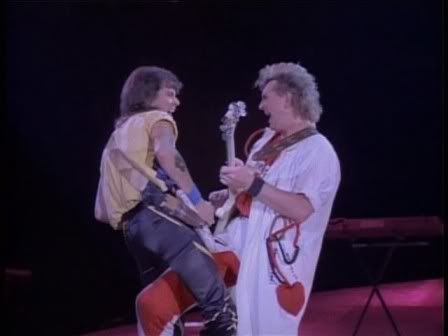
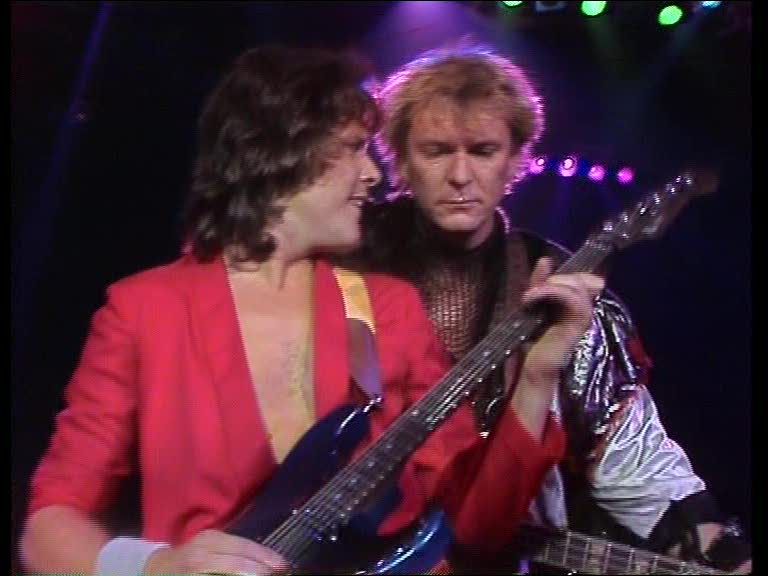
The epic bromance of Fish and Trev

So here are some examples of what made them work so well together in the fourteen years of their musical association...

"Leave It"
(90125, 1983)
This "acapella Disneyland," as Trevor refers to the song, is one of the true collaborations of the album, as many of the tracks began life as Trevor's compositions.  What some fans might not realize is that all of those dozens of  overdubs which comprise the backing tracks are Chris and Trevor, with some help from Trevor Horn.  Jon Anderson's contributions to the song did not come until it was already completed.  All of that intricate vocalizing and glorious chorusing is just their two voices entwining and complimenting each other and the ambitious arrangement...seemingly born to sing together.  With three singers in the band, great vocal harmonies became one of the hallmarks of the YesWest oeuvre.

"I'm Running"
(Big Generator, 1987)
The most ambitious, intricate, and interesting song on an album which tends to be underrated even now; the story goes Chris drove Trevor a bit nutty during sessions by playing the bass riff which opens the song over and over again as an idea he wanted to work on.  At first Trevor wasn't sure of its' potential but then he finally relented and wrote a Latin-themed melody to go with it, as well as some of his best lyrics (then added to with a refrain by Jon).  The song shifts frequently in dynamic and mood and sounds quite unlike anything they'd done (or would do ever after) with great performances and production and lots of interesting little touches (including the hilarious use of a duck call as a transition) and I believe it's a great example of Trevor taking the foundation of Chris' idea and building a beautiful edifice on top of it, even as he used the analogy that Chris was "polishing the vase" due to his obsession with the riff while the building fell down around him!

"Lift Me Up"
(Union, 1991)
Long-time fans know Trevor originally wrote this song prior to its inclusion on the album, as he and his touring band played the opening sequence as their entrance music on the club tour of 1989.  But Trevor has recounted that he and Chris worked on the lyrics together, and the choice of words lends a sense of grandeur to the whole.  This remains an incredibly compelling song, and also a highlight of the Union tour setlist.

"Real Love"
(Talk, 1994)
For me, this song (from the eternal underdog of the YesWest discography and an album much-maligned  - some might say unfairly  - in the fandom) is the best example of their creative partnership and performance charisma.  On an album which is largely defined by the efforts of Trevor and Jon, choosing to make their own collaboration the core of the production, this is a moment in which Trevor does his best once again to take Chris' idea and expand and elaborate upon it until it is something epic in the realization.  Their harmonies on the bridge refrain before the chorus are absolutely wonderful, and the groove and growl and power with touches of a more mysterious atmosphere of the song entire is something yet again unique in their catalog while also a perfect expression of what YesWest was meant to be as an ensemble.

Monday, March 4, 2013

Aww, just when it was getting interesting!

According to this story posted Friday night in The Huffington Post, it appears Zero Hour has been cancelled from its prime time "death slot" for the 2013 midseason.  Hopefully the remaining episodes will air during the summer, or at least there will be a release of the full season on DVD/Blu-ray because despite my snark in regards to reviewing the episodes (which were a lot of fun to write), I was very happy with the prospect of watching a series scored by Trevor, and he and Paul did a wonderful job of lending the show just the right amount of dramatic impetus on a cinematic level, in my somewhat-biased opinion.

But hey ABC - here's an idea: why don't you show the remaining episodes online?  Those people who want to watch it (like me) can do so without causing an impact to your revenue stream.

Now this development lets loose the wild speculation regarding future projects.  I will predict that Trevor will score at least one film this year, and I would hope he works on another album as well, but that's just me.  Those people who find themselves emotionally invested in the AWR thing are likely continuing to wish for that as well, but I've already stated my opinion in regards to its non-relevance.  It would be interesting to see if Trevor decides to further pursue television scoring as well.

Despite this setback, I will of course continue to bring you content which I hope you will find entertaining and edifying; and this week I will endeavor to publish a new essay about one of Trevor's beloved colleagues in celebration of his birthday.

Friday, March 1, 2013

Knowing The Score: Zero Hour S1 E3 "Pendulum"

(Author's note: this essay contains spoilers for the third episode of Zero Hour, so don't say I didn't warn you!)

Thanks to Wikipedia (again), Hank's doppelganger is indeed the "new" Bartholomew.  I'm not sure why that wasn't obvious to me from the first episode, maybe because of the "shock" that he is also Hank.

Of course now I have to wonder who the "new" Judas is, but I'm sure I'm getting ahead of the narrative arc.

"Pendulum" begins in medias res with Hank and Riley doing the insertion team thang in an abandoned building wherein they discover Laila who keeps whispering "He's coming!" and then, wait for it...there is the proverbial Plague Of Locusts.

Wow.

But ah, it's the old bait-and-switch of a dream sequence, as Hank is awakened by the prepare-for-landing announcement.  Too much vindaloo, perhaps?  Dude's gonna have wicked jetlag.  After Riley tells him the only cure for getting over losing a loved one to murder is an equal and opposite reaction of vengeance, they Mulder-and-Scully some more and Hank says he doesn't care about the coming apocalypse, all he wants is Laila.  Now while I approve of such chivalrous intensity of focus, I think Hank's gonna get a smack upside his reality distortion field as to the importance of his new job.

That's right: SAVING THE WORLD!

(Whoops sorry, I was channeling Jeremy Clarkson there for a minute.  Or Movie Trailer Voiceover Guy.)

Anyway, Riley has to bring up the tough questions (because that's her job) and it's the same one we've been pondering since E1: Why?  Why Laila?

Uh...really?  Like we don't know she's just bait to lure Hank to whatever new locale is required as we progress through the new apostles like the Stations of the Cross to navigate whatever shocking (so not) twist the conspiracy takes?

Speaking of, suddenly we're in the City of Lights, and I'm wondering how much these aerial shots are costing the production company.  Where once again, WV is pressing Laila as to the strength of her clock-fu.  Because she must have some pretty wicked jetlag of her own, she looks less than enthused about the request.  And then he starts regaling her with threats of his unique brand of cutlery torture and you gotta figure she's never going to butter her bread ever again, right?  I've certainly lost the desire, ick, and I tell you there's nothing like a fresh crusty baguette slathered with some good Danish butter...uh, where was I?

Oh yeah...so WV is getting all psychotic boyfriend stalker-y by providing Laila with chic outfits and junk and Laila's all, "I'm a restorer, damnit, not an accessory!"  So apparently she has decided to embrace her clock-fu once more to rescue herself from this badly-plotted nightmare.  Way to reclaim your female agency, girlfriend!

The Scooby Gang is reunited, having an infodump moment (and Rachel is wearing a totally bitchin' jacket, btw) and they figure out that those pesky Rosicrucians are not on the side of the angels, apparently.  Then, a monkey wrench is thrown into Operation SCREW YOU FBI by their appearance at the offices of Modern Skeptic (which are pretty sweet for what has got to be a niche publication, just sayin') and a quick-on-the-draw blonde, Agent Willis.  Riley is accused of getting too emotionally involved...gee thanks Special Agent Obvious!  And we get a nice reassurance that yes, Big Brother is watching you...everywhere.

Agent Blonde joins the Cute Squad

Meanwhile at the swanky terrorist lair, Laila uses the d-word (see, I knew it!) and states Hank's former skeptic credo, not knowing of his FEELINGS!...but White Vincent knows, in that creepy supervillain impossibly omniscient way.  Laila repairs the Plot Device, and WV is all, "Pack your bags honey, jetlag be damned!"

Hank's parents appear for moral support, and that is a nicely human moment, yay Show.  Anthony Edwards can act, he was the heart of ER, after all, and so I appreciate those moments when he's not seeming out of his depth in the whole conspiracy blah-blah-blah, which, if you think about it, should not be.  The man runs a magazine devoted to this kind of crap, you'd think he would at least know the ways in which it plays out, even if he doesn't believe it.  But he's spent at least half of his onscreen time looking all WHA?  He asks, "Uh, is there any way that I could have a doppelganger ancestor from Nazi Germany?" and of course they have no idea what he's on about.  Then the action intrudes again because reasons, and Laila signals Hank via the hotel lobby security camera and in another human moment we flashback to the history of their adorable relationship and again I am vindicated because Laila also knows how improbable it is to be Hank's hot wife.

(And I bet you thought I was just being bitter.  Shall we play male entitlement bingo later?  It's always a party!)

In further pursuit of her female agency, Laila delivers the same clue to the Scoobies and the FBI, and it's on like Donkey Kong.  Hank's dad to the rescue when their Google-fu is fail and duh people, of course it's a location!  What else would it be?

Show, you are giving me fits and making me talk to the screen.  That's never a good sign.

Laila is the ultimate plant and next stop is the weird shit vector of...New Jersey.  The Scoobies will beat WV unless the Lincoln Tunnel is backed up, which it usually is, am I right?  Fuggedaboutit!

Woo, that was a long first act!  I kept thinking are they just not going to show the title sequence?  I know, silly me.

Apparently I was totally wrong about Hank and Riley getting the jump on WV, but in another nice aerial shot I am amused to see the Princeton Public Library looks more like a church.  Laila gives clever another shot, and they abscond with the desired info.  Oh Vincent, it's vandals like you which will ensure the revoking of the Freedom of Information Act, tsk tsk tsk.  Father Mickle is all calm placatory to Hank's parents and it's like they're asking if he's doing drugs rather than riding to the rescue of his wife.  But I love the choice of Charles S. Dutton for this role, he's perfect.  But ah...apparently they have a secret of their own, which undoubtedly involves this whole mess and everything has been leading up to Hank...blah-blah-blah.  I guess this is the shocking twist of this episode.

Elsewhere, Creepy Little Boy (seriously, it's like they put out a casting call for "Damian Thorn, age five") who is identified in the credits as Messenger Boy (that's a two-ton hint if I ever saw one) stands on a busy street watching a wall of televisions all showing a manifestation of the Fourth Plague of Revelations, cunningly disguised as a forest fire.  You'll recall we saw the Eighth Plague of Egypt in Hank's dream.  Cut to Mulder and Scully muttering "Curses!  Foiled again!" at the Princeton Public Library.  But wait, Hank has found Laila's message...see, the World Book never fails to inform!  Flashback to more of their cute and why the library is their Special Place...aww, geek love!  Interestingly, we learn that Hank's biggest skepticism is How can you, hot girl with clock-fu, love me, the skeptical schlub?

Since this is TV, that kind of crisis of faith never happens but okay Show, I'll give you points for trying to assuage all the women out there muttering, "Yeah that relationship is realistic," at the screen while rolling their eyes and Tweeting their annoyance (#interrogatingthescriptfromthewrongperspective).  So the Scoobies get their Google-fu on (and Arron is wearing a gorgeous blue shirt which accents his gorgeous eyes, btw) and they pinpoint the reference as the Institute for Advanced Study...an actual brain trust...as the likely destination for the weekly showdown.  Because brain trusts are totally fronts for conspiratorial organizations (*cough*Bilderberg Group*cough*).

Now occupying the same time-space continuum, we watch WV and Laila enter the destination while Hank and Riley and the FBI engage in Have You Seen This Terrorist And His Clock-fu Consultant? with the populace.  A bit of misdirection has occurred because while WV invokes the ghost of Oppenheimer, the point of reference was actually the former office of...Albert Einstein (no really, there's even a plaque).

DUN DUN DUN
(That's not the cue, it's more the violins of This is some weird shit, right?)

But more shockingly, he's the new apostle!  Oh get outta town, Show!  Okay I take back what I said about Hank's parents being possible Nazis or Rosicrucians as the shocking twist, way to keep me guessing!  The location of Al's clock is worked out, and then we have some priests engaging in the sanctity of traditional poker, because the Church is all about preserving traditions and stuff, am I right?  The booze is shown, but because people don't smoke on network television anymore we don't see that long-held vice too.

Seriously though, I think we're supposed to take a moment to nod and say, "I see what you're doing there with your symbolism, Show."  Father Mickle asks a question which is way too complicated for his casual conversational tone and he totally gets called on it.  As the discussion continues the Steadicam relentlessly circles the table and I feel like I suddenly wandered into a DePalma movie or something.  His colleagues deconstruct the situation and Mickle might have his own crisis of faith at some point after this, because friends don't let friends get waylaid by terrorists, doncha know.

Cut to Hank and Riley missing their rendezvous with destiny again...they've got a clock fer chrissakes, you'd think they would be punctual.  They're half an hour behind WV, who is now giving Creepy Little Boy an update and again, there's another DePalma-esque shot of steps, and even he's afraid of the tyke, who writes down the info in some kind of code or dead language.  Meanwhile the Scoobies - primarily Agent Blonde and Arron - are bonding over their love of anarchist esoteric media outlet Disinformation and Arron blurts out the best line of the episode.

It's like porn!

Ye gods that boy is adorable. But Rachel gives him a so lame, dude, so lame look and his puppy crush attempts to regain some dignity.  And then there's another bombshell: WV doesn't have the right clock!  All of this twisting is making me dizzy, Show!

Infodump, infodump, conversation of significance, more discussion of The Love That Will Never Die, and then WV makes that Goddamnit Laila, you're making me having feelings! face...oh Vincent, why so evil?  Did no one ever love you in your antiseptic upbringing?  They're both sweating, to underscore the tension of the situation, natch. I appreciate the credibility of making them look under the thumb of that wicked jetlag.

Creepy omniscience, crazy awesome science, detecting, and...breadcrumbs from Laila.  Of course I want to know how she managed to find yellow pushpins in the midst of her hostage ordeal, but whatever.  And lo-and-behold, that dream was prophetic, just not in the way we were thinking.

We have to stop meeting like this, Hank.  Seriously
Nah, he didn't say that.   Just like I figured, WV wants Hank for reasons which are probably more obvious than they should be at this stage in the game.  Ah, but there are still some surprises to be had, I gotta say, this is definitely getting more interesting.  And what, is everybody involved in a conspiracy here?

Gunplay, running, "Let me tell ya why you're not going to shoot me...'cause you ran out of bullets, fool!", penultimate bombshells away, plus two priests walk into a bar and...okay, one of them was already there, but infodump, and they keep looking around like some pesky Rosicrucian is gonna come in and get all medieval on their asses too, while Hank's parents attend mass and look all conspiratorial again.

Einstein's clock is recovered, the secret message inside decoded, and if there was mention of which apostle he was supposed to represent, I missed it.  I'm hoping Wikipedia will clear this up.  Locust symbolism ahoy! and okay, I get the destruction metaphor but how is that supposed to symbolize the destruction of God, exactly?

Despite my snark (which provides your daily allowance of alleged entertainment value), I liked this episode the most so far, the infodumps and the action merged together in a much more effective fashion.

Now to the good stuff...

There is some nicely stirring music during the on-campus scenes at the Institute, this is my favorite cue of the episode.  It has a certain majestic feel to it without being overbearing.  And the use of Laila's theme in the later scene between WV and Laila underscores a certain emotional resonance.  The theme used during what I will refer to as the "breadcrumbs" scene has some nice electronic touches which makes me wonder if it's Paul's or maybe a collaboration.   Trevor's scoring pedigree is entirely evident in the overall mood of the themes and cues, and I could be mistaken but I don't think there was any licensed music in this one, just lots of newsreel footage (faked or no it looked pretty good).

And hey, the story kept swinging...like a pendulum!  Ah Show, I may bond with you after all.

Friday, February 22, 2013

Knowing The Score: Zero Hour S1 E2 "Face"

(Author's note: this essay contains spoilers for the second episode of Zero Hour, so don't say I didn't warn you!)

Lest you think I'm merely employing the popular mode of cultural criticism afforded us by such venues as Television Without Pity and so on, I really want to like this show.  Seriously.  I'm all about conspiracies and secret societies and paranormal macguffins and the like.  But yes, I am rather snarky, I fully admit it.  I don't mean to put anyone off, even though I do have issues with the way this show is written and acted.

But it is scored beautifully.

So I will carry on with the understanding that I might mock a bit, but it's done with potential affection.

Thanks to Wikipedia we've learned each episode is named after a part of a clock; which could be interpreted as either pretty clever or rather hokey.  I'm choosing to believe (because I WANT TO BELIEVE) it is the former.  It's the little things, you know.  And each episode also corresponds to an hour - this time White Vincent relates a rhyme:
But sometimes one is not one, sometimes one is two.
So Harry Nilsson was right when he told us two was the loneliest number since the number one.  I'm always happy when pop culture validates the wisdom I've accumulated through other pop culture.

We need a montage!

We last left our intrepid travelers Hank and Riley at the sub-sicle in the Canadian tundra, with the imminent arrival of the Child Born Of No Womb and I thought about how many Artic explorations have gone horribly awry and figured that statistically this one would also screw the pooch, as it were.  And since the pilot is shot almost immediately after White Vincent shows up, well, yeah, except not.  But Hank is awfully brazen for a paranormal journalist schlub, demanding to know where his wife is and saying stuff like, "It ends here."

(Uh, dude...we still have eleven episodes to go.  Pretty sure this is not ending in the sub-sicle.)

And his wheedling for WV's life is effective, as Riley makes the Goddamnit Galliston, you're making me have FEELINGS! face as she squares off with her FBI-issue weapon.

(Standoff, not so much.  But WV delivers a nice metaesque commentary on why it won't work while Hank discovers ANOTHER MAP IN A TIMEPIECE!  I'm beginning to sense a pattern here.)

And as I predicted, events take a turn for the FUBAR as WV enacts an escape, leaving Hank and Riley stranded on the tundra as the sub-sicle returns to the frozen depths from whence it surfaced.  But Riley has a satellite phone and Hank took photos of the Stopwatch of Significance, so all is not lost.

They return to a bureaucratic shitstorm, with Arron adorably wondering "Who pays these people?" as he is gladhanded from one agency to another (and their offshore call centers, one imagines).
Aw sweetie, we do!  Which is why we get the government we deserve.
Cue Laila's sad-but-pretty theme as Hank returns, miraculously not dead or even frostbitten, with a declaration that despite all his previous insistence upon skepticism he's now embracing magical thinking because FEELINGS!
FEELINGS!

And then they all bond over their crazy ninja caffeine-fueled plan which we will call SCREW YOU FBI and solve the mystery.  Followed by various expository bits involving both sides of the conundrum, as it were.  We receive a crash course on apocryphal thinking and I'm confused as to the strength of Laila's clock-fu.  Riley is revealed as a shorthand of edgy touches: knocking back the bourbon like the embittered, hard-drinking, tattooed, loft-living, listener of Bob Dylan she is as Rachel pays her a visit and says My Google-fu is strong, yes.

(Once again, yay for a nice subtle usage of licensed music.)

They have a deep conversation and Riley positions herself as useful despite Operation SCREW YOU FBI.  And suddenly Hank is in India hot on the tail of WV and there's more apocryphal discussion stateside, as well as investigation into what I consider the interesting portion of this mystery: the discovery of Hank's doppelganger - a Nazi officer - aboard the sub-sicle.  I liked WV's bit of dialog in the opener which basically stated: Kinda screws with your head, am I right?

Then there's a wonderfully (perhaps unintentional) comedic interlude with Nazi Collector Extraordinaire who is apparently recreating Hitler's secret bunker in his apartment, or something.

Riley saves Hank's ass again and they Mulder-and-Scully their way through the sultry streets of Chennai.  There is discussion of another apostle and I think each episode probably focuses on each of the "new" apostles as well.  The examination of Hank's doppelganger is, again, the most interesting part of the dramatic arc of this episode.

The "new" Thomas is cloistered in Chennai, and the encounter leads to ever-more questions, of course. There's a discussion of a love across time which will never die...especially Hank, the harbinger of doom with his FEELINGS!  And those pesky Rosicrucians are at it again.  Just then, WV, heralded by his creepy theme, shows up to cleanclaim her clock (no really, it didn't need to be cleaned, despite having been buried in the ground since 1938, presumably).

Running!  Emotional torture! as Hank spots Laila with WV.  And he becomes further aware of the cost of his particular Grail Quest.  Was Hank's doppelganger the "new" Bartholomew, then?  In the words of LOLcats worldwide, I haz a confusion.  But Hank then interprets typical Indian waste management policy also as apocrypha and that may be reaching just a tad.  It's easy to think the whole world's coming to an end when you're in a place both chaotic and odorous.

I think every episode should end with a tick tick tick.  
*crickets*
Oh c'mon, that's totally a great idea!

Onto the score...

Musically, now that I've had some time to really soak up the scoring, I've noticed, of course, that there are separate motifs for:
-the clock (or maybe the mystery itself)
This is my favorite in that the chord progression reminds me a bit of "Prague" from Bad Company.  It also relates to the opening title card/end credits sequence.
-Laila
-White Vincent
(Is it just me, or has anyone else wondered if there's a Black Vincent and he's the good twin?)
...and this is a standard scoring type of trope, certainly, but I appreciate that it lends the series as a whole a type of continuity.  I'm still not sure if it's the composition or mix which keeps the cues from stomping all over the action, but it's all very tasteful.  In this episode, the best cue is that of the "Standing Mother" scene, with beautiful ambient touches married to gentle piano and strings, then woodwinds.  Lovely.

Friday, February 15, 2013

Knowing The Score: Zero Hour S1 E1 "Strike"


(Author's note: this essay contains spoilers for the first episode of Zero Hour, so don't say I didn't warn you!)

As I have discussed, I was just giddy with the thought of Trevor going into television scoring, of being able to watch a program with his music every week because, well, of the desire for him to score everything which requires music in the world.  A bit wildly ambitious, I know, but hey I'm a fangirl, whaddya want?

Previously Trevor has made the occasional foray into television work, writing a couple opening themes for short-lived shows as well as themes for sports coverage on various channels and scoring a commercial.  So this assignment is more in line with what I consider to be worthy of his time and effort.

Zero Hour is a new ABC hour-long drama and the high concept is thus:
Hank Galliston, publisher of a paranormal-enthusiast magazine, while trying to save his abducted wife, learns that he must also save the world from an impending cataclysm.

I'll jump right in with my commentary, much as the show starts unspooling its story.  Because there is an enormous superstructure of a complex plot device ticking away (sorry) at the heart of this show, it was necessary for the first five minutes of the pilot to contain a massive infodump which obliquely hints at The Twelve and a child born of no womb, apparently, who grows up to become an international terrorist.  And this all takes place within the Axis of Evil because of course it does.

Returning to the present day we have Anthony Edwards as Every Guy, sorta.  Every Paranormal Journalist Guy Hank Galliston.  He's one of those old school guys quixotically tilting against the creeping rot of tabloid silliness.  He's a schlub - albeit a smart witty loving one - with a beautiful wife (because this is TV) and two really cute plucky editorial assistants (demographically I have to give it up to Casting for providing a matched set in that regard).
Seriously, these two are so cute.

And we have a plot device.  And speaking of. okay, so how do we have a clock which apparently is going to decide the Fate of the Free World being sold in a flea market under the Brooklyn Bridge?  Just sitting there on a table along with a bunch of other seemingly random and innocuous antique-y stuff.
And after a conversation full of Dramatic Significance which is a bit too obvious for my taste, we learn that his wife Laila is a clock restorer/repairer and it seems as though we can surmise that she is merely a carefully-selected pawn in a larger game of international metaphysical cat-and-mouse.  And this mystery forms the heart of the narrative and has something to do with the Rosicrucians, that all-purpose Secret Conspiracy Cabal.  And also Nazis, because Hitler was an occultist nutjob.

And then a whole bunch of stuff happens, and people Hank cares about are getting hurt, and he's not gonna take it sitting down, especially after he finds a map engraved on a diamond found inside of The Clock.

(Okay that was cool, I gotta say.)

It's a cliffhanger ending, of course, which I figure it's going to be from one episode to the next but I feel like we have already been told too much about the Grand Conspiracy, or it may just be that it borrows from so many existing mythologies I'm feeling a bit Stop Me If You've Heard This One Before.  But it's all at a break-neck pace and that may be part of the problem as well, there's no time to reflect on what all this stuff may mean.  I'm assuming this will resolve itself in later episodes.

Hank finds a Scully for his Mulder in FBI Agent Beck Riley who insists on being a part of his quest to find his wife, but not merely where she has gone, but why.  Hank is a model of caution who tends to attract spontaneous free-spirited women (i.e.Laila) and so finds a like mind in the quiet intensity of Agent Riley.

Now onto the score...

It is known that Trevor's long-time collaborator on his scoring work is his former tech/assistant Paul Linford and so it's nice to see co-credits in this regard for the show:


The use of an actual orchestra - as Trevor noted in a response to a question posted in the comments of a Facebook entry a few days ago - does really go a long way towards providing a proper dramatic gravitas; it reminds me of other works, of course, especially scores like the National Treasure films and I Am Number Four but the strings are very tasteful and elegant, in some cases the music is far underneath the dialogue - which I believe is something intrinsic to television - so as not to be too intrusive.  However, it's obvious that this show has cinematic aspirations in terms of scale so the selection of Trevor as scorer is appropriate.  Presumably each episode is going to be like a mini-movie.  The main theme for the title and end credit sequences is one of those propulsive intriguing kind of motifs Trevor writes so easily.

And I was happy to note only one use of gratuitous licensed music, which seems to be taking over television.  Music can be as important an element as any other in a narrative, not merely wallpaper, and it strikes me that the producers have duly taken this into account, and so bully for them.

Apparently neither the ratings nor the critics have been kind to the premiere episode but I'm living the dream, so we'll see what the future brings...and if nothing else there's always DVD.

Monday, February 4, 2013

The Man of a Thousand Credits: another Southern gentleman

One of a continuing series in regards to the myriad variety of Trevor’s discography.

In 1993, vocalist Paul Rodgers released a tribute album to Muddy Waters which contained more guitar legends than you could shake a chicken leg at, and among those doing some fine guitar-slinging was Our Trev, appearing on two tracks: "Louisiana Blues" and "She's Alright."


Rodgers possesses a solid reputation as a blues singer even as the majority of his body of work is rock n'roll, but much like many of his peers his roots in and love of the blues is entirely evident, given the way he sings these songs with a certain reverence over and above his normal swagger.

And more than a few of the featured players also have demonstrated their hues of blue during their careers; but given the era of its release one notices that there are a lot of melodic AOR players featured.  I've always assumed Trevor's participation came about because he and Rodgers shared the same manager at that time.  And in the period between, say, 1985-1994, David Gilmour was apt to turn up for any session requested (he's admitted as much in various interviews).  Some players are obvious choices, such as Buddy Guy, Jeff Beck and Steve Miller.  Overall the field is strong, one fun surprise is hearing Rodgers' soon-to-be bandmate Brian May tear it up with just a hint of his harmonic histrionics on "I'm Ready."

I have to say that of the two tracks which feature Trevor, "Louisiana Blues" is a total barnburner: slinky, swampy and tough.  Trevor's interpretation of blues tropes suits his playing on this one, even as he renders the solo with lots of fast fretwork, it doesn't stray too far beyond the groove.

Trevor also appears in a filmed performance from that same year (the video release is titled Paul Rodgers and Company) with a core band of Rodgers, Neal Schon on guitar, bassist Todd Jensen and drummer Dean Castronovo.  The set is a combination of Rodgers' hits with Free and Bad Company and selections from the tribute, with Trevor appearing to reprise his performance on "Louisiana Blues."  Special guests Brian Setzer, Slash and Trevor appear in a blues jam for the encore, playing on renditions of "Rock Me Baby" and "Crossroads."  An interesting bit of trivia for you: Billy Sherwood - who also served his time with Yes as a sideman on the Talk tour and then as a member of the late-1990s iteration of the band - provided the audio production and mix.

Fashion Watch: that's the same shirt he wears in the Star Tracks video.

Three years later, another bluesman receiving a tribute was the late great Stevie Ray Vaughn and Trevor made an appearance on the 1996 release Crossfire: A Salute to Stevie Ray, which also featured performances by fellow fretmeisters Steve Stevens, Steve Morse, and blues legend Albert Lee among others.  It was great to hear the Maestro had retained his chops after casting off the mantle of guitar god, although in my opinion his solo in "Tightrope" is a little too much in his own style rather than giving the nod to SRV.  During his personal appearance in August of last year, Trevor recalled meeting Stevie Ray and commented on what a nice guy he was, despite his rather flashy persona.


These instances of performing in blues-rock idioms which were not a part of Trevor's formative years gives us an opportunity to appreciate how well he can adapt to different situations, in that he plays with as much fervor and fire as any of those who are the primary progenitors of the genre.  Trevor's shades of blue may originate from a different South (below the Equator) but are equally compelling.

Sunday, January 13, 2013

"the dreaded box"


In tribute to Trevor Charles Rabin on his 59th birthday...you are ever an exquisite vintage, Maestro.

Author's note: this op-ed piece features artwork I commissioned from my wonderfully talented friend Elizabeth Frazier: musician, artisan, graphic artist.  She and her husband Matt Frazier head the musical collective Of Shadow People and you can learn about her work at these sites:
Of Shadow People
Elizabeth's Eclectic Emporium

PS: this is controversial op-ed and if you have a dislike for such things then caveat lector.


~*~*~*~

"That's one thing that's always, like, been a difference between, like, the performing arts, and being a painter, you know. A painter does a painting, and he paints it, and that's it, you know. He has the joy of creating it, it hangs on a wall, and somebody buys it, and maybe somebody buys it again, or maybe nobody buys it and it sits up in a loft somewhere until he dies. But he never, you know, nobody ever, nobody ever said to Van Gogh, 'Paint a Starry Night again, man!' You know? He painted it and that was it."
- Joni Mitchell, Miles of Aisles


For those who pursue a career in the performing arts, fandom expectation and the accompanying sense of entitlement is a Box.  It is a box, a prison...a coffin, even.  Don't believe me?  Think about how many times you have longed for people to regard you not through the lens of their own expectations, but in acknowledgment of who you truly are.  Now, at this moment, or any moment in time when you were attempting the task of authenticity.


Museum Piece
illustrations by Elizabeth Frazier

In Robert R. McCammon's 2011 novel The Five (which no less an authority than Stephen King has touted as his best novel yet) - about an Austin-based rock band which goes through an harrowing series of events which will test them all not only as musicians but as human beings - there is a section in Part Three which acknowledges a concept which I've been positing for years now as it relates to one Trevor Rabin.  One of the characters (Terry, the keyboard player) is relating all the ways in which his father attempted to derail his musical aspirations as a young man, and the lead singer/guitarist (who goes by the sobriquet Nomad) then further muses on the notion:
"Hey maybe it wouldn't been good for me.  Maybe I would've come to it myself, in time, but it wasn't what I wanted.  But he was pressuring me day and night, cutting down my music, cutting me down...everything he could do to get me in the box."

The dreaded box, Nomad thought.  For an artist, it was the worst thing.  The safe, predictable thing that can lead a creative person to boredom, drugs, insanity and early death.  Wasn't that the point of the box?  To kill risk, which was the life and soul of creation?

Towards the end of the novel, when the band is meeting with their booking agent, the conversation leads Nomad back to the same considerations:
He had nothing against entertainment.  Entertainment was fine.  The Five's material was mostly party band stuff, feelgood rockers or ballads, but still...to be told they had a boundary, a line they were not supposed to cross, a box they were supposed to be happy and glad and pleased not to ever climb out of.  That seemed like a kind of death, in itself.  The death of experimenting, the death of the noble failure from reaching too high.  The death of caring whether what you did was good or bad.
___________________________________________

One might even consider that McCammon - who debuted as a novelist back in the late 1970s as one of the new voices in the horror/splatterpunk boom of the mid-80s - is in a sense returning to that same box with this story.  But although the novel contains obvious horrific and supernatural elements, it is less Horror and more Hard-Won Lessons Learned on the Battlefield of Life.  But I digress...

Readers may note that I made mention of The Box in my essay "Fusion Furor" in regard to the way fans desire Trevor's musical identity to be presented, a version of him which no longer exists.  Nostalgia not only for him as he was, but for the way we all were.  Music often functions as a time capsule which recalls for listeners a specific time and place.  Fans want reminders of the Glory Days not merely for the artist, but themselves.  And I will say that such a desire is certainly seductive but also entirely selfish in regards to the career of the one who creates it.

No artist truly desires their creative expression to be defined or dictated by the external influences of others.  No great art - or even great entertainment - was ever made by committee or focus groups or demographic studies.  Creativity is wholly a personal construct and the best of it is engendered as the most singular output of the person or people involved.  And therefore, even as it may be accused of being "indulgent," it must contain the essence of why we admire the artist otherwise that admiration has no point.

A few months ago I made a post at Yesfans regarding some of the popular response to Jacaranda because one particular opinion puzzled me a bit:
Yes, it's instrumental, indulgent etc. etc., but I don't care - his playing is a joy....and I thought, "So what makes an instrumental album from a guitarist who has been a film scorer for the past sixteen years indulgent, exactly?" Because I assume the use of "indulgent" is a pejorative despite the backhanded compliment ultimately rendered by the comment. Does it have to do with The Box? If Trevor doesn't climb back in The Box does that automatically make the effort indulgent?
(...)
Unless, that is, "indulgent" is defined by not having an agenda or demographic. If an artist creates solely for their own satisfaction and does not acknowledge the assumed audience, is it really an indulgence or is that the process as it should be?

For it is comments like these which quite clearly illustrate the confines of the existing expectation for a certain portion of the fanbase:
all this high end art and film scores is great for most fans but I just want to hear Trevor make another great solo album like he did in the 80's.
To say I love this album is an understatement, however, I was disappointed that he does not sing on any of the tracks. His voice is silky and smooth and pairs beautifully with his guitar.
However, I do miss his singing, as this is his first release since, I think, about 1989 or so. So it isn't like he is sitting around cranking out music. That is why I miss his singing so much, because it has been so long since we heard his voice.
(There are so many things wrong with this last statement it would take too long to list them all.)

Now let's consider the actual timeline of these references...
Trevor released only two solo albums in the 1980s, literally bookending the decade: Wolf (1981) and Can't Look Away (1989).  And the former is not regarded too highly among many Rabinites, so it all rests on the (padded, because it was the 80s after all) shoulders of the latter, an album that while a literal Holy Grail among fans today did not even crack the Billboard Top 100 when it was released.  And that is despite the success of the first single "Something To Hold On To," (and repeated airings of the video which received a Grammy nomination), and the turnout at various public appearances (including the club tour).  So whither the Rabid Rabinites of Yore who might have provided the Maestro with the success he required to finally legitimize his solo career and perhaps create another of those boxes they so longed for?

Because here's why there will never be another Can't Look Away...the first one was a commercial failure.  The numbers don't lie.  Even as it remains a perennial favorite among fans it did little in the larger picture to enhance or strengthen his overall appeal as a solo artist   It performed only slightly better than the other three solo albums (although it's difficult to know how successful Beginnings was upon its original release in South Africa).  And therein lies the tragedy because it is a great album, an album which comes closest to representing the depth and breadth of what Trevor is capable of as a singer-songwriter, arranger and producer.  I say "commercial" failure because CLA is absolutely an artistic success within the context of Trevor's discography.  Trevor is very proud of the album and rightly so.

When Trevor commented to fans in 1995 regarding leaving Yes one of the statements he made was:
"I'm pretty certain that I won't be hooking up with any AOR-oriented band."
Note the emphasis, if you will.  Leaving Yes would have provided an opportunity for Trevor to revive his solo career and continue in that same path but the simple truth - the truth which many fans seem unwilling to accept even now, nearly 20 years later - is that it was never going to happen.  As has occurred several times throughout his career, Trevor chose instead to continue his journey into the unknown.

More puzzling to me is the opinion that Trevor wasted his career by becoming a film composer; and yet there are numerous examples of other rock musicians doing the exact same thing, most notably people like Randy Newman, Danny Elfman, Stewart Copeland, Clint Mansell and Trent Reznor.  People who still desire to work as musicians but have decided to branch out from popular music into a field which is lucrative and creative and gives one the opportunity to be heard by potentially millions of people around the world in perpetuity (depending on the popularity of the film).  How is that a waste?

Despite the weight of existent expectation (and known to Trevor), Jacaranda was never going to be a vocal project and it has been stated as such in recent interviews.  To deliberately choose such a path and court fandom displeasure is an inherent risk, but one he was fully prepared to face, as he stated in my interview with him:
"If you’re a musician and you want to succeed, you want to get better, you'll have to take risks.  There is simply no way you can grow without taking chances. Succeeding takes time and prolonged effort no matter what the odds are against you."

It seems Trevor has borne up under the weight of perceived disappointment in his career choices of late but he has made a few remarks which would appear to me to also originate from a place of frustration:
"There is a group of middle aged women who have followed my career; they keep in touch with my assistant. They keep asking him, 'When is he going to put an album out? He has not put an album out since 1989.'  My God, I’ve put 17 albums out since then. They don’t consider my movie soundtracks music."
"I didn’t actually realize it until somewhere half through this period, because there were all of these scores released, but there were people who might have bought the last solo album and they didn’t see these records as the same thing. To me, the scores were very personal and intense work, and no less relevant than a solo album."

So as fans are discouraged that he won't just sing, he might also be discouraged that they won't just listen.  But here's one thing I am certain of: Trevor Rabin is not climbing back in The Box, not now, not ever.  Even in consideration of reviving his rock n'roll identity, he is literally not the same person now, so he cannot be that person whom people claim to miss so much.  Do I desire to hear him sing again?  Absolutely.  But not if he doesn't want to, and his voice is not merely the one which issues from his larynx, but from every part of his being...and it's there to hear, loud and clear, as it has been all along.

Do you hear it?  Because if you don't, you're missing out on something uniquely beautiful.